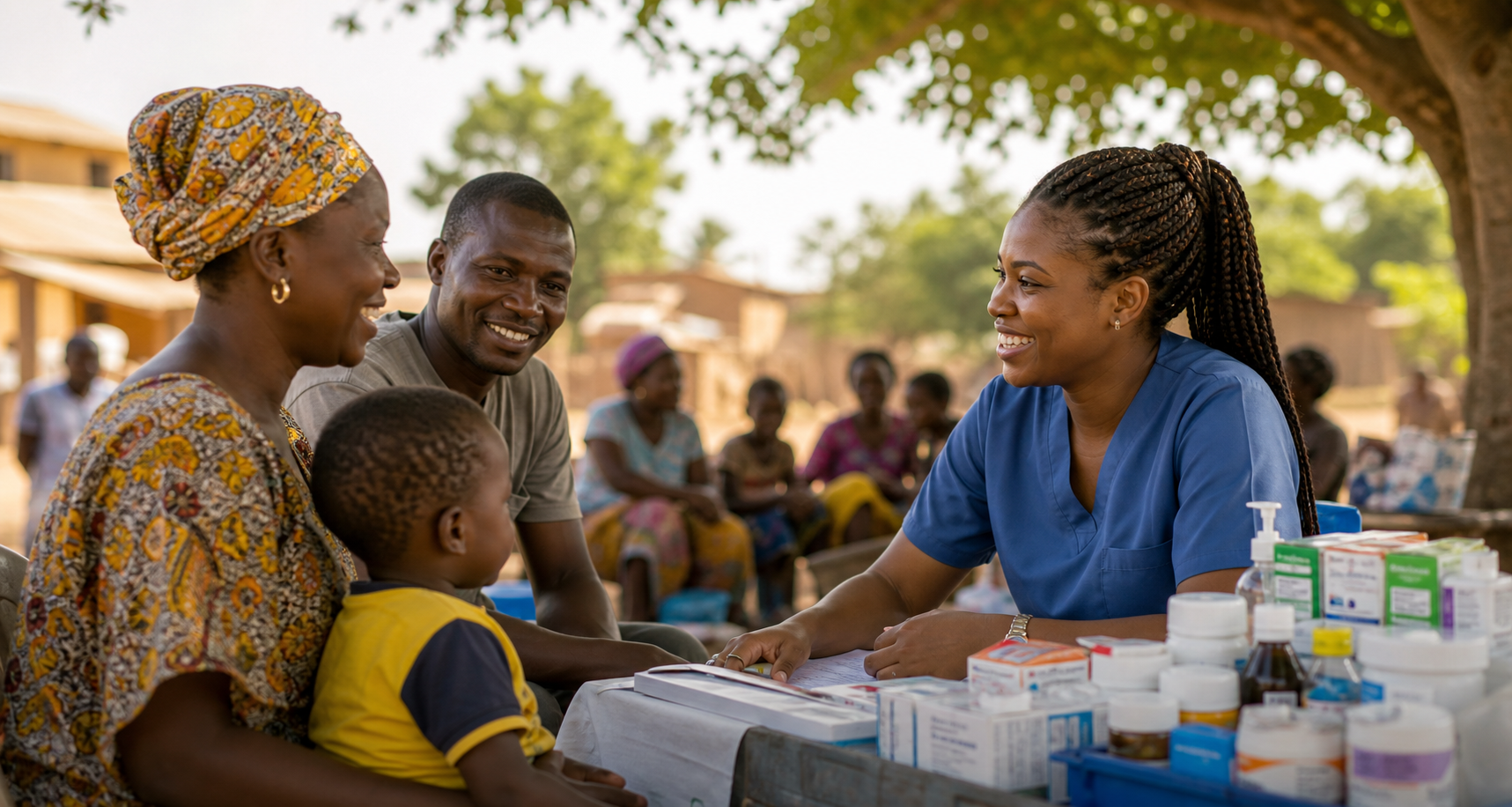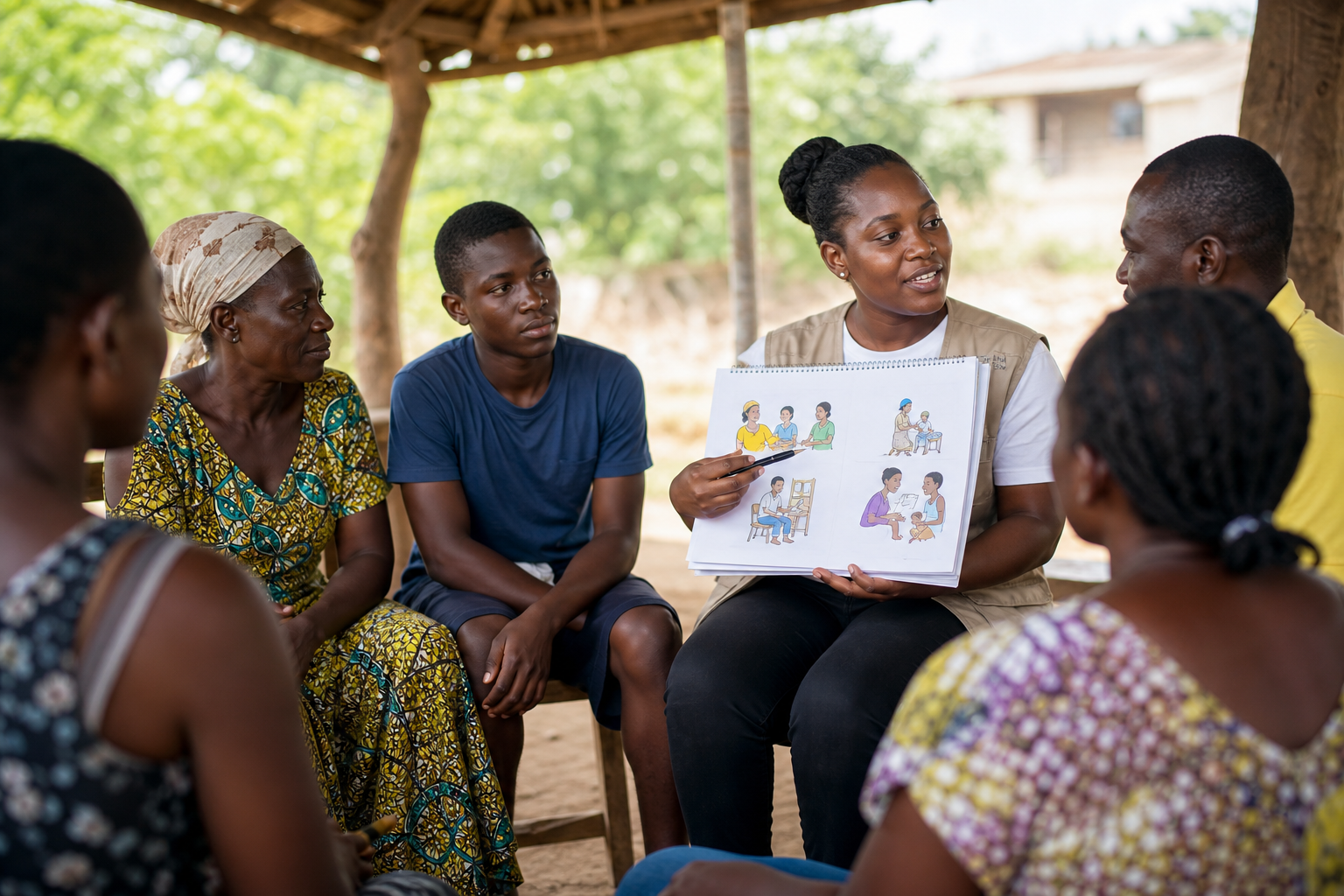
Healthcare programs designed around access, prevention, and trust.
Osmond Health Foundation programs respond to practical health needs in underserved Ghanaian communities. Each program is designed to identify a real access gap, coordinate appropriate support, involve qualified partners where possible, and report activity responsibly.
Core Program Priorities
- Maternal Health: education, preparedness, screening support, and referral guidance for mothers and caregivers.
- Child Health: caregiver education, early warning signs, nutrition messaging, and family-centered outreach support.
- Community Outreach: practical field activities that bring prevention, education, and basic screening closer to underserved communities.
- Diagnostics: screening coordination, basic diagnostic partnerships, privacy-aware registration, and referral pathways.
- Education: public health messages, school and community sessions, media materials, and volunteer-led learning.
Program Areas
Medical Outreach
Problem addressed: distance, cost, and delayed access can keep families from timely basic care.
What OHF does: coordinates outreach days, health talks, screening, basic support, and referral guidance.
Who benefits: rural and underserved communities, families, older adults, and people needing early guidance.
Partner support: transport, supplies, clinical volunteers, medicines where approved, and reporting costs.
Maternal & Child Health
Problem addressed: mothers, children, and caregivers may lack timely education, screening, or referral support.
What OHF does: supports awareness, family education, early identification of concerns, and coordinated referrals.
Who benefits: mothers, infants, children, caregivers, families, and community health volunteers.
Partner support: midwives, nurses, maternal health supplies, education materials, and outreach sponsorship.
Health Screening
Problem addressed: preventable risks can remain unnoticed until conditions become harder to manage.
What OHF does: helps organize community screening with education, privacy, and referral guidance.
Who benefits: adults, families, workers, students, and communities needing early detection support.
Partner support: diagnostic supplies, laboratory partners, clinicians, venues, and follow-up coordination.
Disease Prevention
Problem addressed: many health risks can be reduced when communities have practical prevention information.
What OHF does: shares prevention education on common community health concerns and care-seeking signs.
Who benefits: families, schools, community groups, volunteers, and local leaders.
Partner support: public health educators, campaign materials, media support, and training resources.
Health Education
Problem addressed: people need clear, usable information to make everyday health decisions.
What OHF does: delivers community education on prevention, maternal health, nutrition, hygiene, screening, and care-seeking.
Who benefits: families, youth groups, caregivers, schools, community volunteers, and local organizations.
Partner support: educators, translation support, printed materials, media production, and venue support.
Emergency Relief
Problem addressed: urgent health-related needs can place pressure on vulnerable families and communities.
What OHF does: coordinates practical relief support, supplies, referrals, and partner response where appropriate.
Who benefits: communities facing urgent health, sanitation, maternal, child, or access-related needs.
Partner support: essential supplies, logistics, clinical advice, emergency transport, and reporting.
How Partners Can Support Programs
Partners can support a single program, sponsor a defined outreach activity, donate equipment, provide qualified volunteers, fund logistics, or help improve monitoring and reporting. All program support should be aligned with community needs, available capacity, safeguarding expectations, and responsible public communication.