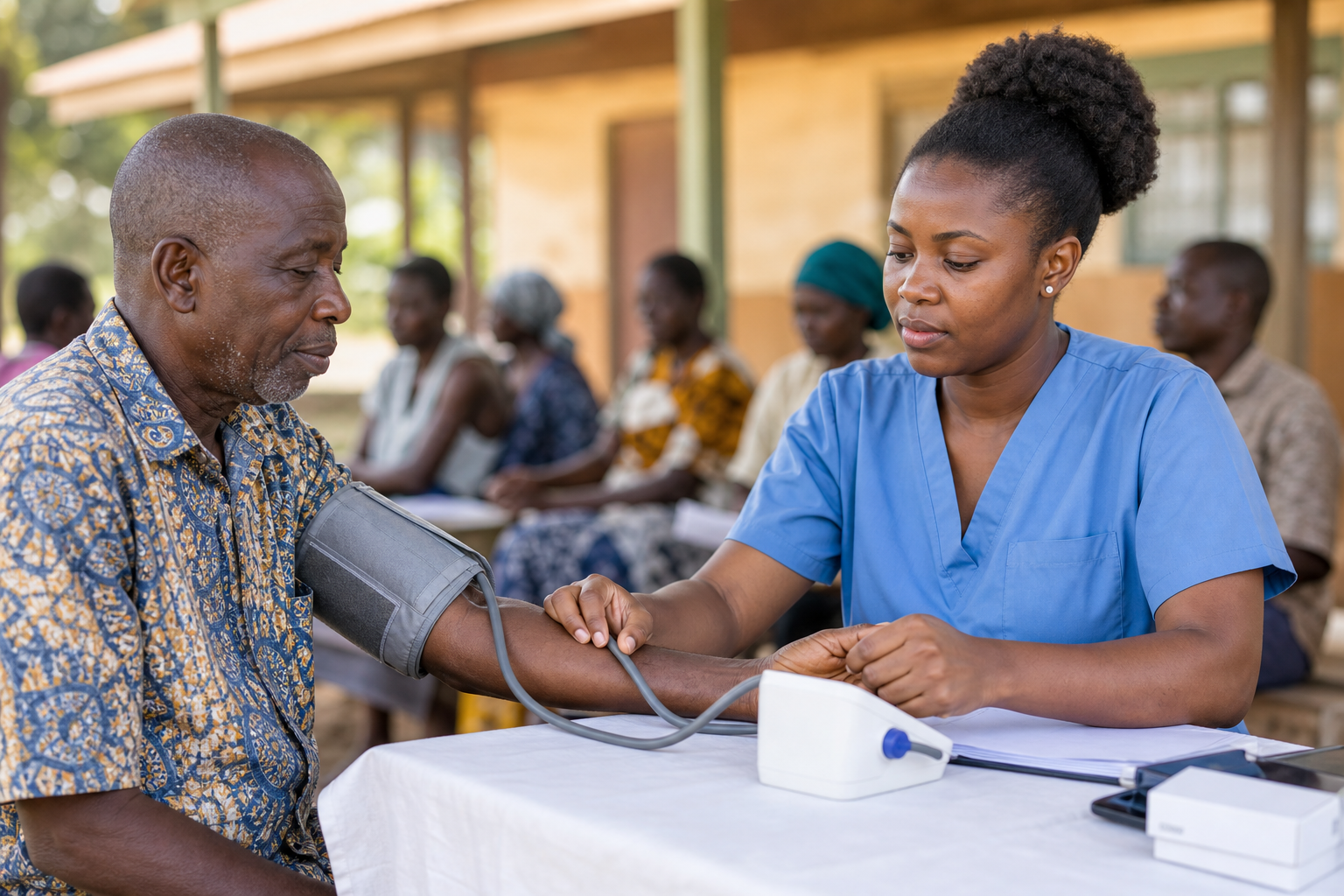
Hospitals, clinics, laboratories, professional associations, and specialist teams can help strengthen safe community health delivery before, during, and after an outreach activity. OHF seeks clinical relationships that complement local health systems, respect professional scope, and make referral and follow-up expectations clear from the outset.
Ways Healthcare Institutions Can Collaborate
- Clinical planning, triage protocols, consultations, screening, and technical supervision.
- Referral pathways for people who require facility-based assessment or ongoing care.
- Nurses, midwives, physicians, laboratory professionals, pharmacists, and other appropriately credentialed personnel.
- Training for volunteers, community mobilizers, and health education teams within their approved roles.
- Specialist outreach or time-bound medical missions aligned with local priorities and continuity planning.
- Technical review of donated equipment, consumables, maintenance needs, and user readiness.
Clinical Quality and Patient Protection
Every collaboration must define clinical leadership, credential checks, permitted services, escalation procedures, infection prevention, consent, record handling, incident reporting, and the limits of what can be provided in a community setting. A screening result is not presented as a diagnosis unless an appropriately qualified professional and approved process support that conclusion.
OHF prioritizes minimum-necessary data collection, private handling of identifiable information, consent-aware photography and storytelling, and aggregate public reporting. Partners should identify any legal, regulatory, professional indemnity, licensing, research, or data-protection requirements before an activity is confirmed.
Referral and Continuity of Care
Outreach is most useful when participants understand what happens next. Partnership planning therefore considers referral criteria, receiving facilities, documentation, affordability constraints, urgent escalation, communication with participants, and realistic follow-up responsibilities. OHF does not imply that a referral guarantees admission, treatment, or financial support.
What We Agree Before Delivery
- The health need, target population, service boundaries, location, and operating schedule.
- Named clinical and operational leads with clear authority and escalation routes.
- Staffing, equipment, consumables, transport, venue, waste, security, and communication responsibilities.
- Data fields, consent language, access controls, retention expectations, and reporting outputs.
- Referral, adverse-event, safeguarding, and post-activity review arrangements.
Partnership Review Process
- Submit the proposed clinical contribution, personnel, service area, location, and timing.
- OHF and the institution assess need, credentials, scope, logistics, risk, referral capacity, and community coordination.
- Both parties document roles, approvals, safeguarding, data handling, and reporting.
- The activity proceeds after clinical and operational leads confirm readiness.
- Partners review delivery, incidents, referrals, aggregate results, and improvements for future work.
Propose a Hospital or Clinic Partnership
Share your institution’s capabilities, proposed clinical scope, available personnel, preferred region, referral capacity, and timeframe. Please do not include patient records or identifiable health information in this initial inquiry.